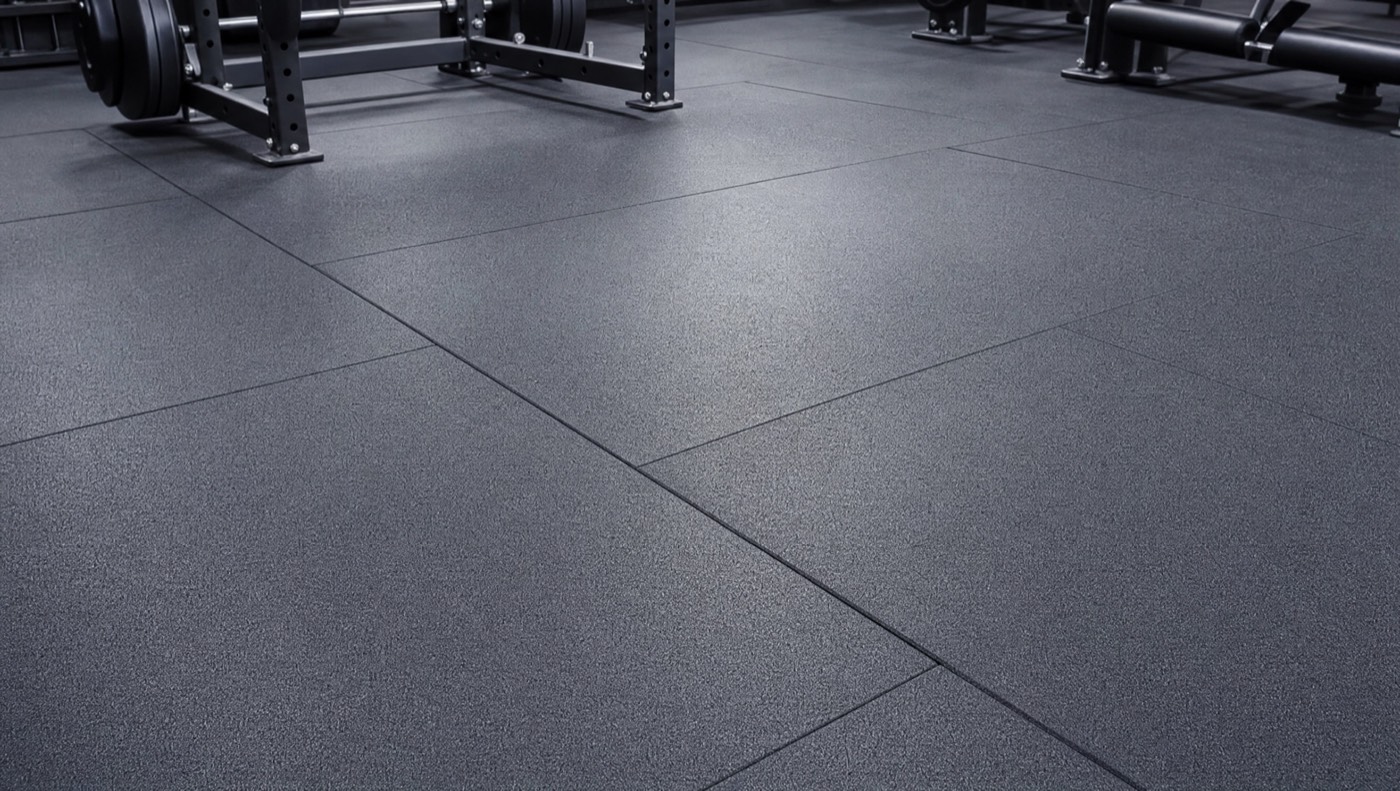
Rubber flooring, rolled rubber, rubber tile, and rubber runners, shows up in weight rooms, stairwells, healthcare, transit, and kitchens. It's tough and shock-absorbing, but it's cleaned and protected, never stripped and waxed, and the wrong chemicals will ruin it.
Most commercial rubber flooring is made from recycled or vulcanized rubber (often SBR or EPDM) and comes as rolled sheet, interlocking tile, or runner strips. It's prized for shock absorption, traction, and durability, which is why you see it in fitness and weight rooms, stairwells, locker rooms, healthcare corridors, transit, and behind commercial kitchen lines. Rubber runners add traction and protect floors in aisles and entries.
| Do | Don't |
|---|---|
| Sweep or vacuum daily to remove grit | Strip and wax it |
| Clean with a pH-neutral cleaner and auto-scrubber | Use solvents, citrus, or oil-based products |
| Rinse so cleaner residue doesn't build up | Use high-alkaline floor strippers |
| Use a manufacturer-approved rubber finish if you want sheen | High-heat burnish or use harsh abrasive pads |
| Address spills promptly, especially oils and grease | Flood seams or leave standing water |
Oils, solvents, and harsh degreasers are rubber's real enemies, they swell, soften, or discolor it. Neutral chemistry and the right pads keep it intact.
Rubber doesn't need sealing or waxing, the material itself is the wear surface. Where a facility wants more sheen, easier cleaning, or added stain resistance, a manufacturer-approved rubber-floor finish or dressing can be applied. It's optional, and it has to be a product made for rubber, not a standard floor finish.
Rubber is low-maintenance when it's cleaned correctly and a headache when it isn't. A maintenance program sets the right chemistry and cadence, scrubbing, periodic deep cleaning, and optional refinishing, so weight-room and corridor rubber stays clean, safe, and intact.
Related: gym and sport floor care, maintenance programs, and LVT vs. LVP for vinyl alternatives.
No. Rubber is not stripped and waxed. It's cleaned with a pH-neutral cleaner, and an optional manufacturer-approved rubber finish or dressing can add sheen where wanted.
Sweep or vacuum to remove grit, then clean with a pH-neutral cleaner and an auto-scrubber or microfiber mop. Avoid solvents, oil-based products, and harsh degreasers.
No. High-alkaline floor strippers and solvents can swell, discolor, or break down rubber. Built-up residue is removed with a rubber-safe deep clean, not a finish stripper.
Almost always cleaner residue from too much product or the wrong product. A proper rinse and neutral clean removes the buildup.
No. Rubber doesn't require sealing or waxing. A manufacturer-approved rubber finish is optional, for added sheen, stain resistance, or easier cleaning.
New rubber can off-gas a rubber odor for a while. Ventilation and an initial cleaning help it dissipate faster.
Rubber excels at shock absorption and protecting equipment and subfloors in weight rooms; luxury vinyl wins on appearance and wood or stone looks. Many facilities use both.
Floor-type pages must separate what should be waxed from what should not be waxed. VCT and some resilient floors may need finish systems; LVT, hardwood, marble, terrazzo, concrete, tile, rubber, and gym floors often need different cleaning, polishing, sealing, recoating, or maintenance methods.
Facility type, floor material, square footage, current condition, service needed, timing, access window, photos, traffic areas, safety concerns, and decision-maker contact details.
Photos are optional but helpful. A remote video walkthrough is a convenience option when condition or access is hard to explain. Larger schools, hospitals, universities, municipalities, portfolios, and complex projects may still need an in-person walkthrough.
Strip&Wax.com builds coverage carefully by collecting real facility requirements, provider service areas, capability details, and quote outcomes. The site focuses on accurate scope, clear expectations, and useful commercial floor-care guidance before an opportunity is routed.
Use these related pages to compare services, understand cost, plan facility-specific work, and route the right commercial floor-care opportunity.
A strong request gives a commercial floor-care team enough context to understand the building, the surface, the deadline, and the condition of the floor without making the form hard to finish.
Commercial floor-care buyers are usually trying to protect a facility, prepare for traffic, improve presentation, control safety risk, or restore floors before a deadline. The best quote requests connect the floor problem to the service, floor type, facility type, schedule, and access requirements.
High-value requests often include thousands of square feet, multiple rooms, heavy traffic lanes, old finish buildup, school or healthcare scheduling windows, retail entrances, warehouse walkways, municipal procurement steps, or a multi-location maintenance need. The buyer should understand that price changes with condition and access, not just square footage.
Useful quote notes include the facility type, floor material, current condition, deadline, preferred service window, whether furniture or shelving must move, whether the building needs low-odor products, and whether photos or a remote walkthrough can show the problem better than a written description.
Use the links below to compare scrub vs strip, review VCT floor care, check industry examples, estimate pricing with the cost calculator, or request a quote.
Use these resources to narrow the request into the right service, surface, and facility type: commercial floor waxing, floor stripping and waxing, VCT maintenance, scrub-and-recoat, burnishing, school floor care, healthcare floor care, retail floor care, and industrial floor maintenance. The buyer does not need every technical term before submitting the request.
Use this page to move from a general floor-care question into the right quote path. Commercial floor work gets easier to price when the buyer identifies the facility type, floor material, condition, timing, and project goal.
Commercial Rubber Floor and Runner Care requires different decisions than a simple cleaning request. The quote should identify the floor material, current finish condition, traffic pattern, damaged areas, access windows, furniture movement, and whether the goal is gloss, protection, slip resistance, easier maintenance, or full restoration. Some floor types can be stripped and refinished; others should be cleaned, sealed, polished, recoated, or maintained without wax.
For buyers, the best first step is to submit the request with a city, phone number, approximate square footage, and photos if available. The follow-up can clarify whether the floor is VCT, LVT, concrete, terrazzo, tile, rubber, gym flooring, marble, or another surface, then route the scope toward the right commercial floor-care process.
Do not wait until every detail is perfect. Start the quote request with the basics, then add photos, measurements, floor type, or walkthrough notes when available. Larger schools, hospitals, municipal buildings, retail stores, warehouses, and multi-location properties can add scope details during follow-up.
Request a floor-care quoteTell us your facility, floor types, and square footage. We'll scope the work and send a written quote. Not sure what you have? Send a photo and we'll tell you.